
Introduction
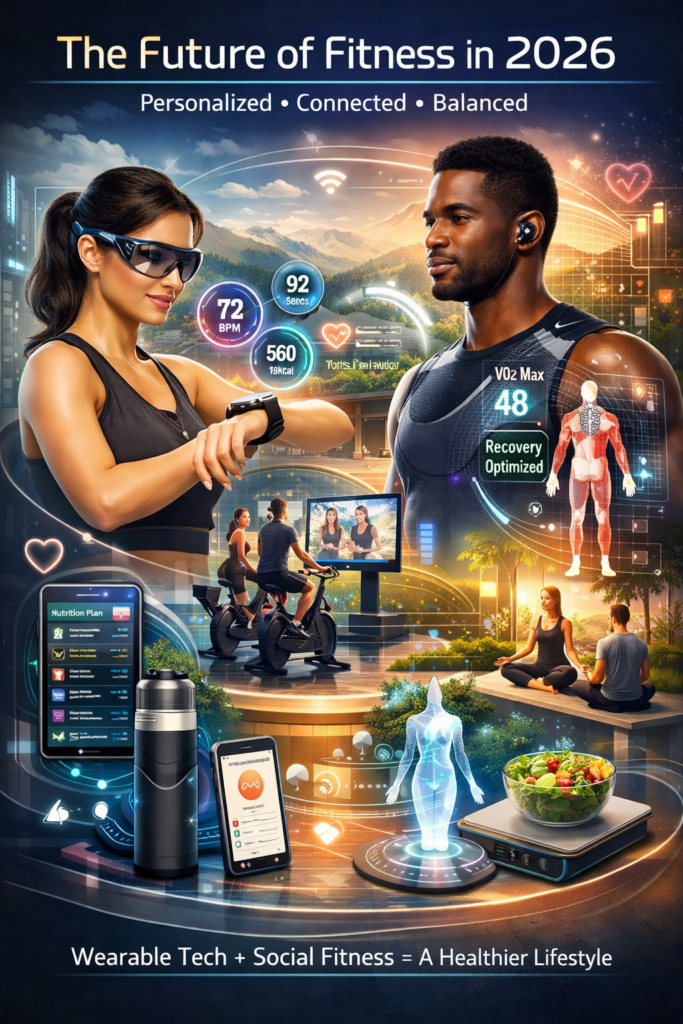
Fitness in 2026 looks very different from just a few years ago. Health is no longer measured only by weight or gym hours. Instead, people are focusing on recovery, mental wellness, and long-term sustainability. Wearable technology and social fitness trends are leading this transformation by combining data, motivation, and community support.
The Rise of Wearable Technology

Wearable devices such as smart rings, fitness trackers, and AI-powered watches have become everyday tools. These devices track sleep patterns, heart rate, stress levels, physical activity, and recovery in real time.
Unlike traditional fitness tools, modern wearables focus on overall well-being, helping users understand how their body reacts to daily habits.
Benefits of Wearable Tech for Mental Health
Wearable technology is no longer limited to tracking physical activity. In 2026, mental health monitoring has become one of its most valuable benefits. Modern wearables can detect stress patterns by analyzing heart rate variability, sleep quality, and breathing behavior.
These insights help users recognize early signs of anxiety, burnout, or emotional fatigue. Many devices now offer guided breathing exercises, mindfulness reminders, and stress alerts when the body shows signs of overload.
By understanding how daily habits affect mental well-being, users can make healthier choices, improve emotional balance, and maintain long-term mental resilience. Wearable tech empowers people to take control of their mental health before problems become serious.
How AI Is Personalizing Fitness Plan
Artificial Intelligence has transformed fitness from generic routines into fully personalized health journeys. In 2026, AI-powered fitness platforms analyze wearable data such as sleep cycles, recovery status, heart rate trends, and activity levels to create adaptive workout plans.
Instead of following one-size-fits-all programs, users receive recommendations tailored to their body’s needs. If recovery is low, AI suggests lighter workouts or rest days. If energy levels are high, it encourages more intense training.
This intelligent personalization reduces injury risk, prevents overtraining, and helps users achieve consistent progress. AI ensures fitness plans evolve daily based on real-time data, making workouts safer, smarter, and more effective.
Best Wearable Devices in 2026
The wearable market in 2026 offers advanced devices focused on total well-being rather than just fitness tracking. Some of the most popular wearable categories include:
- Smart Rings – Lightweight devices that track sleep, recovery, and stress with high accuracy
- AI Fitness Watches – Advanced watches offering real-time coaching, recovery insights, and heart health monitoring
- Biometric Fitness Bands – Designed for athletes, tracking muscle fatigue and performance metrics
- Smart Earbuds – Monitor heart rate, posture, and breathing while providing audio coaching
These devices integrate seamlessly with health apps and social fitness platforms, helping users stay motivated, informed, and connected. Choosing the right wearable depends on personal goals, lifestyle, and health priorities.
Data-Driven Recovery Is the New Priority
Recovery has become just as important as exercise. Wearable tech now analyzes sleep quality, muscle recovery, and nervous system health. This helps users avoid burnout and overtraining while improving long-term performance.
Instead of pushing harder every day, people are learning when to rest and when to train.
What Is Social Fitness?

Social fitness connects people through shared health goals. Apps and platforms allow users to:
- Join fitness challenges
- Share progress with friends
- Compete on global leaderboards
- Support each other through communities
Why Social Fitness Improves Consistency
When people feel connected, they stay motivated. Social fitness adds accountability, encouragement, and fun to daily routines. Seeing others progress inspires users to stay active, even on difficult days.
The Future of Fitness in 2026
Conclusion
Wearable tech and social fitness are not temporary trends. They are shaping the future of wellness by focusing on recovery, community, and smart decision-making. Fitness in 2026 is smarter, healthier, and more human.